Shark Printsfor the Wall
Four real shark photographs from the open Pacific and South Australia, which one suits which room, and what the sharks in them are up against
Most shark art is a drawing of a shark, or a photograph of a shark that has been pushed so far in editing it might as well be. These four are the animal as I met it, in its own water, with the light that was there. Here is what each one is and where it belongs.
The Mako: one shape, one surface
A shortfin mako a foot below a mirror-flat surface off California. The water above doubles the animal, so the print is really two sharks, and from across a room it reads as a single bold shape. It is the one I would hang in a modern living room or an office on HD acrylic, where the depth of the acrylic adds to the depth of the water. Makos are listed as Endangered, caught faster than they breed on longlines set for other fish. The full story is on the print's page.
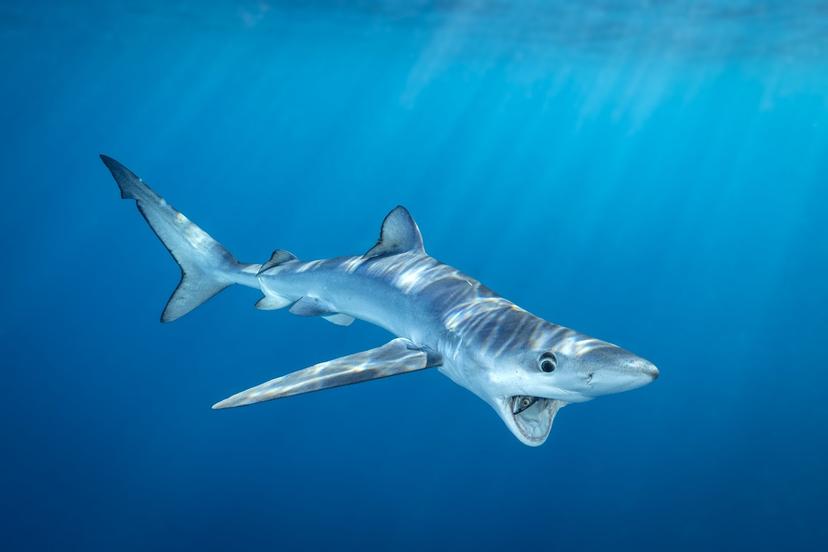
Big Blue: the dramatic one
A blue shark close to the lens, mouth open, under shafts of sunlight in the open Pacific. It is the loudest of the four and the one people stop in front of. Hang it large, 20 by 30 or 24 by 36, on HD metal, in a room with enough wall to let it breathe. Blue sharks are the most heavily fished shark on Earth, and this frame is a reminder of what that number is made of. Big Blue.
The Gathering: the quiet blue
Several blue sharks offshore, one sharp and the rest soft in the distance. It has Big Blue's colour without its volume, which makes it the better choice for a bedroom, a hallway or a dining room. Sixteen by 24 or 20 by 30 on metal, or on paper in a white frame. The Gathering.
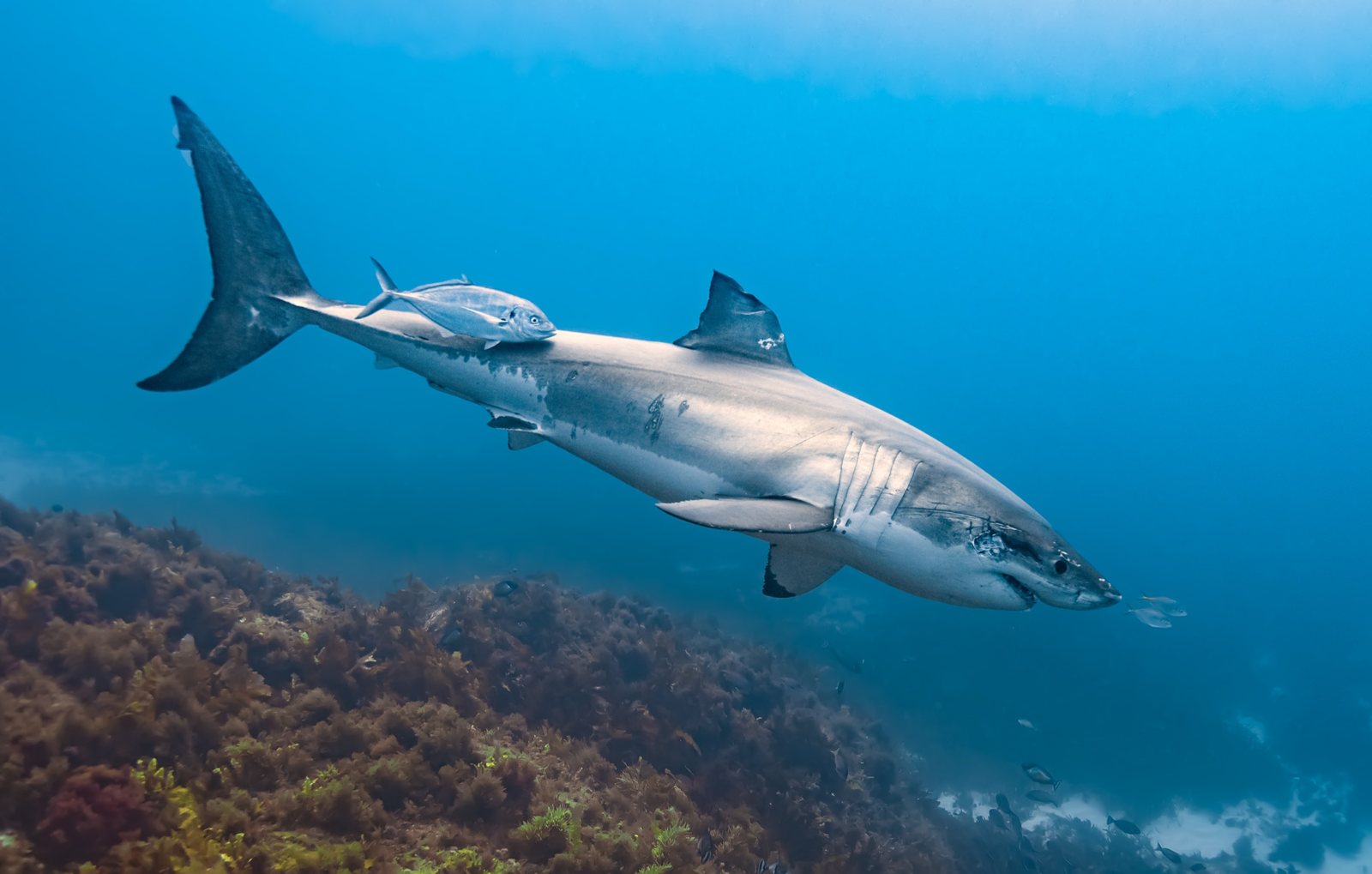
The Escort: the great white, with its forest
A white shark sweeping over a kelp-covered reef in South Australia. Most great white pictures are open blue; this one has the reef under the animal, which gives it place and scale. It is the print for the person who wants the apex predator, and on HD metal the dark kelp and the pale belly separate cleanly. The kelp matters as much as the shark: it is the habitat we are restoring at home through Guardians of the Kelp. The Escort.
Which medium for a shark
Sharks live in blue, and blue is where HD metal and HD acrylic earn their price: the colour goes luminous and the whites of the animal stay clean. Fine art paper softens everything, which suits the quieter frames and anyone who wants to choose their own frame. Our buying guide goes through sizes and rooms in detail.
Why these are sold by a nonprofit
I license these photographs to My Clean Ocean. The nonprofit sells the print, has it made to order in the USA, and keeps the profit for the youth programs, where teenagers learn to film sharks the way I did, as animals with faces rather than threats. A print is a purchase, not a donation, so there is no tax receipt; what it buys is a kid's day on the water. The wider picture is in our guide to ocean conservation in Southern California.
Every shark in these frames was alive and swimming when the shutter closed. Hang one, and keep it that way.
More Field Notes
Put a Kid in the Ocean
Your donation today funds an expedition, a certification, a mentor, a career — for a young person who never thought the ocean was for them.
EIN 41-4167030 · 100% of net donations fund youth programs. Contributions are tax-deductible to the extent permitted by law.