
Tiger Shark
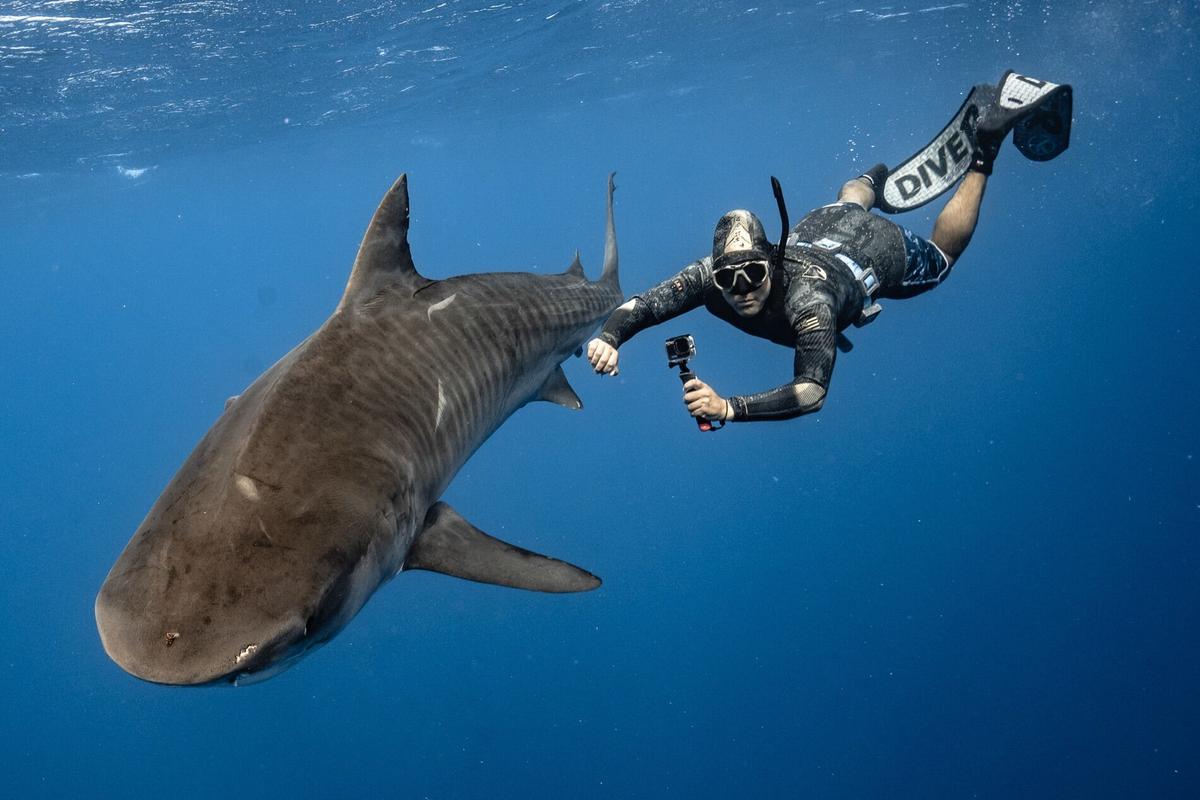
Striped as a juvenile, blunt-nosed and enormous as an adult, the tiger shark is the ocean's least fussy eater. Our team has freedived with them.
Length of large adults; some reach 18 ft
NOAA FisheriesWeight of the largest females
NOAA FisheriesTurtles, rays, birds, dolphins, fish, carrion and trash
Florida MuseumIUCN Red List
IUCNThe stripes, and why they fade
Young tiger sharks carry dark vertical bars down their flanks, the stripes that give the species its name. As the shark grows the bars fade, and a big adult can look almost plain grey. Tiger sharks are among the largest sharks: adults commonly reach 10 to 14 feet, large females about 16 feet, and the heaviest over 1,400 pounds.
What tiger sharks eat
Almost everything. Sea turtles, which their broad, notched, serrated teeth can crack through; stingrays and other sharks; seabirds taken at the surface; dolphins; fish; dead whales. Stomach contents have included license plates and tires, which earned the species its nickname as the ocean's garbage can.
That diet makes tiger sharks important. By eating turtles and seabirds they shape where those animals feed, and by cleaning up carcasses they recycle what the ocean would otherwise lose.
Where tiger sharks live
Tropical and warm temperate seas worldwide: Hawaii, the Bahamas and the Caribbean, Florida, Australia, the Indian Ocean. They are rare off Southern California, where the water is too cold, though occasional visitors appear in warm years. Our team's tiger shark dives have been in warmer water, freediving with a camera at close range.
Diving with tiger sharks in the Bahamas
The Bahamas is one of the best places on earth to see tiger sharks, and one of the reasons is a law. In 2011 the country closed its waters to commercial shark fishing and became a shark sanctuary. A 2017 study estimated that shark and ray diving brings the Bahamas about $114 million a year, which makes a living tiger shark worth far more to the islands than a dead one.
Most tiger shark dives there, at sites such as Tiger Beach off Grand Bahama, are baited: operators place a crate of fish on the sand to bring the sharks in, and divers kneel and watch. Scientists still debate how much that feeding changes where the sharks go. What is not in doubt is that these dives turned tiger sharks from a feared animal into a protected one, and that well-run operators keep divers low, still and out of the way.
Status
The IUCN lists the tiger shark as Near Threatened. They are taken for fins, skin, liver oil and meat, and as bycatch, and they are targeted in shark-control programs off some beaches. Their relatively fast growth and large litters, often 30 to 50 pups, give them more resilience than makos or whites.
Not a Southern California regular: tiger sharks need warmer water. Sightings here are rare and tied to unusually warm years. To dive with them, our crews travel.
What we do about it: Blue Lens. The bigger picture: our guide to ocean conservation in Southern California.
Tiger Shark, Answered
Why is it called a tiger shark?
Juveniles have dark vertical stripes along their sides. The stripes fade as the shark matures, so large adults can look plain grey.
How big do tiger sharks get?
Adults are commonly 10 to 14 feet. Large females reach about 16 feet, and the heaviest exceed 1,400 pounds.
What do tiger sharks eat?
Almost anything: sea turtles, rays, other sharks, seabirds, dolphins, fish and carrion, along with man-made objects they swallow by mistake.
Are there tiger sharks in California?
Rarely. They prefer tropical and warm temperate water, so they turn up off Southern California only occasionally, in warm years.
- NOAA Fisheries species profile: Tiger shark
- IUCN Red List, Galeocerdo cuvier
- Florida Museum of Natural History, Discover Fishes: Tiger shark
- Haas et al. (2017), The contemporary economic value of elasmobranchs in The Bahamas, Marine Policy
- Bahamas shark sanctuary: 2011 ban on commercial shark fishing
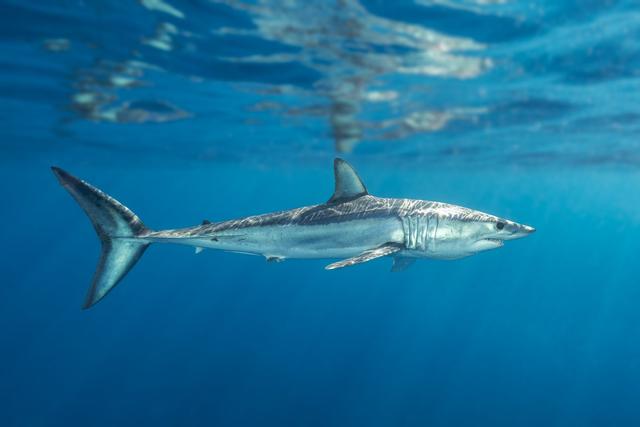 Shortfin Mako SharkThe fastest shark in the world
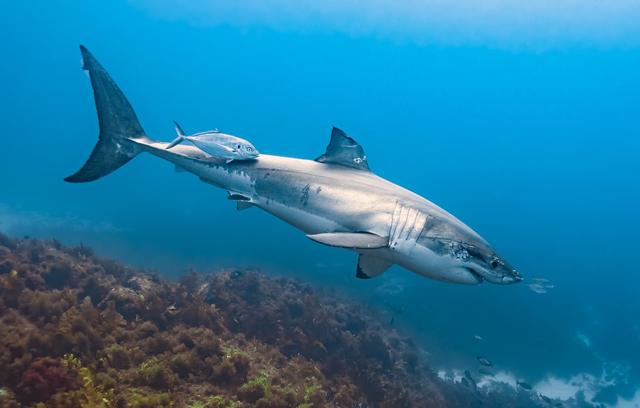 Great White SharkThe largest predatory fish on Earth
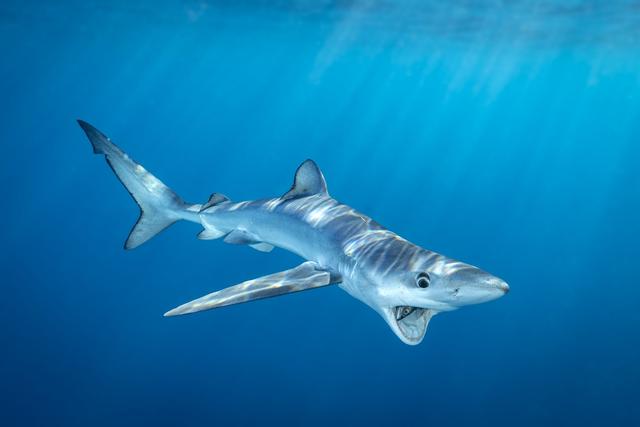 Blue SharkThe most widely travelled, and most heavily fished, shark
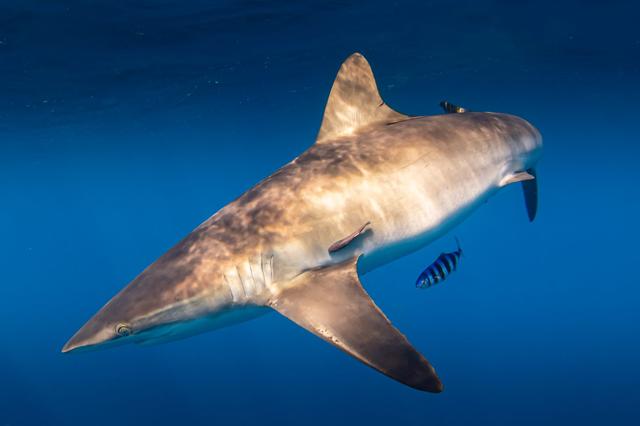 Silky SharkThe open-ocean shark the tuna fleets catch by the million
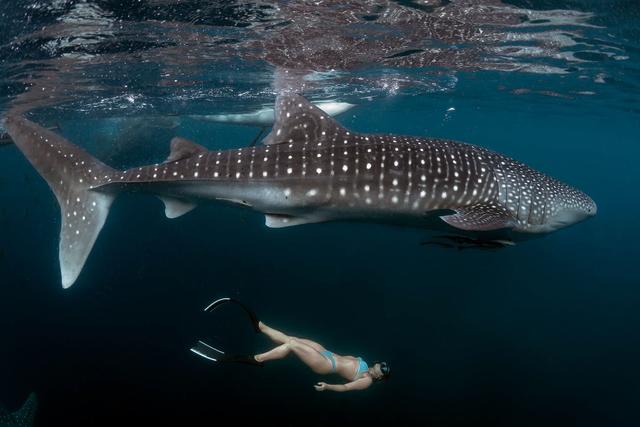 Whale SharkThe biggest fish in the sea
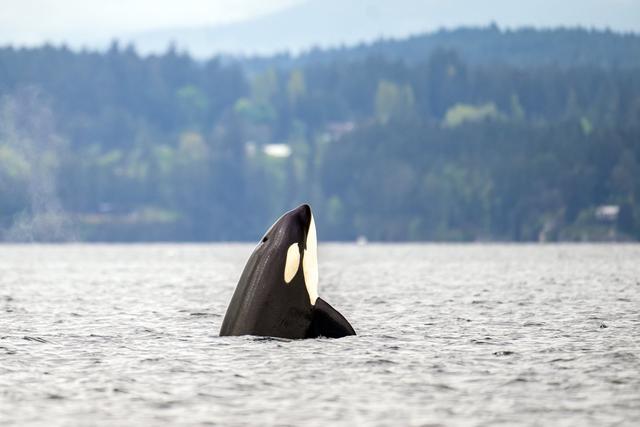 Orca (Killer Whale)The ocean's top predator, and the largest dolphin
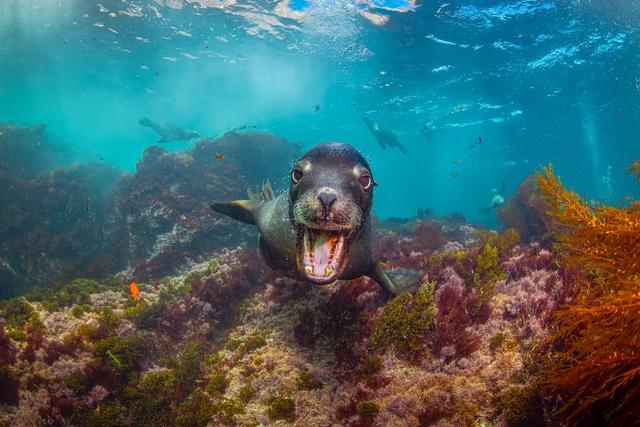 California Sea LionThe barking, curious acrobat of the Pacific coast
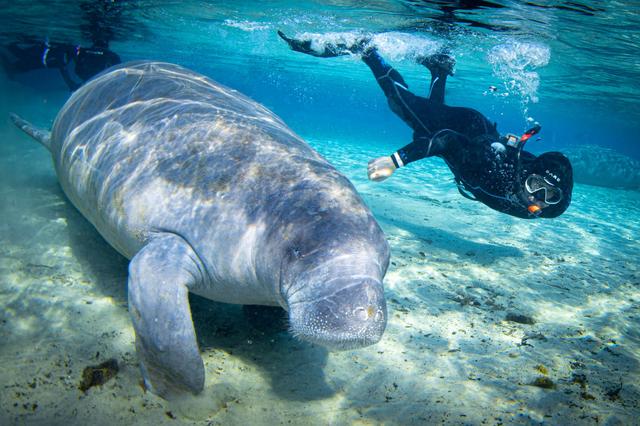 Florida ManateeThe gentle sea cow, and why it needs warm water and seagrass
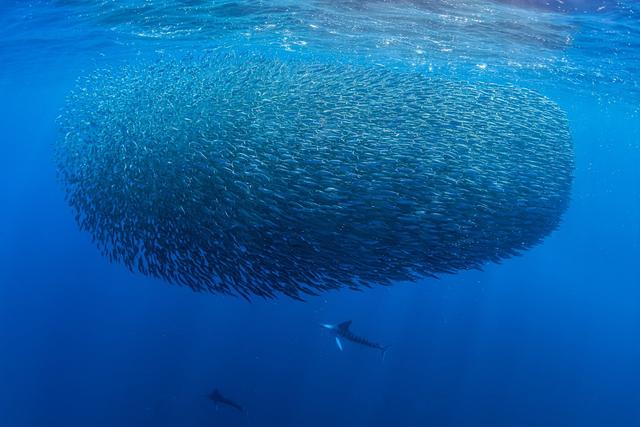 Pacific SardineThe small fish that feeds the whole coast
 Giant KelpThe fastest-growing forest on Earth
Fund an Expedition
Every animal on this page is one our youth crews learn to film, count and protect. Your gift puts a kid on the boat at no cost to their family.
EIN 41-4167030 · 100% of net donations fund youth programs. Contributions are tax-deductible to the extent permitted by law.