
Whale Shark
The biggest fish on Earth eats some of the smallest things in it. Whale sharks are gentle, endangered, and a short flight from Southern California.
Typical maximum; larger individuals have been reported
NOAA FisheriesWeight of a large adult
NOAA FisheriesFilter feeder: plankton, fish eggs, small fish
NOAA FisheriesIUCN Red List, 2016
IUCNHow big is a whale shark?
The whale shark is the largest fish alive. Adults commonly reach 30 to 40 feet and around 20 tons, and larger individuals have been reported. A whale shark is a shark, not a whale: it breathes with gills and its skeleton is cartilage. The name comes from its size and its feeding.
Each whale shark carries a pattern of pale spots and stripes that is unique to the individual, like a fingerprint. Researchers identify and track thousands of them from photographs, which is why a tourist's picture can be real science.
What whale sharks eat
Plankton, fish eggs, krill and small schooling fish, strained from the water through a mouth that can be four to five feet wide. A whale shark swims slowly with its mouth open or gulps actively at the surface where food is thick. Its teeth, thousands of them, are tiny and play no role in feeding.
Where whale sharks live, and the Baja connection
Whale sharks range through warm seas worldwide and gather seasonally where food concentrates: Western Australia, Mexico's Yucatán, the Philippines, and, close to home, the Gulf of California. Bahía de La Paz and Bahía de los Ángeles in Baja California host juvenile whale sharks for months each year, with regulated swim tours a couple of hours' flight from Southern California.
Why whale sharks are endangered
The IUCN listed the whale shark as Endangered in 2016 after population declines of more than half in parts of its range. They are struck by ships, caught in nets, and were long hunted for fins and meat in some countries. They grow slowly and may live 80 years or more, so losses are not quickly replaced. Responsible tourism, with limits on boats and swimmers, has become one of the main reasons to keep them alive.
Whale sharks are rare visitors to California itself. The nearest reliable place to see one is the Gulf of California: La Paz and Bahía de los Ángeles in Baja, where licensed guides run swims with juveniles from roughly fall through spring. Our team has filmed them there.
What we do about it: Youth Ocean Experience. The bigger picture: our guide to ocean conservation in Southern California.
Whale Shark, Answered
What is the biggest fish in the world?
The whale shark. Adults commonly reach 30 to 40 feet and about 20 tons, and larger individuals have been reported. It is a shark, not a whale.
Are whale sharks dangerous?
No. Whale sharks are filter feeders that eat plankton and small fish. They are gentle around swimmers, and the only real risk is a careless boat or a tail swipe from getting too close.
Where can you swim with whale sharks near California?
In Baja California, Mexico: Bahía de La Paz and Bahía de los Ángeles host juvenile whale sharks seasonally, with regulated guided swims. California itself gets only rare visitors.
Why are whale sharks endangered?
Ship strikes, net entanglement and past hunting for fins and meat reduced populations by more than half in parts of their range. They grow slowly and breed late, so they recover slowly. The IUCN listed them as Endangered in 2016.
- NOAA Fisheries species profile: Whale shark
- IUCN Red List, Rhincodon typus (2016)
- Wildbook for Whale Sharks photo-identification library
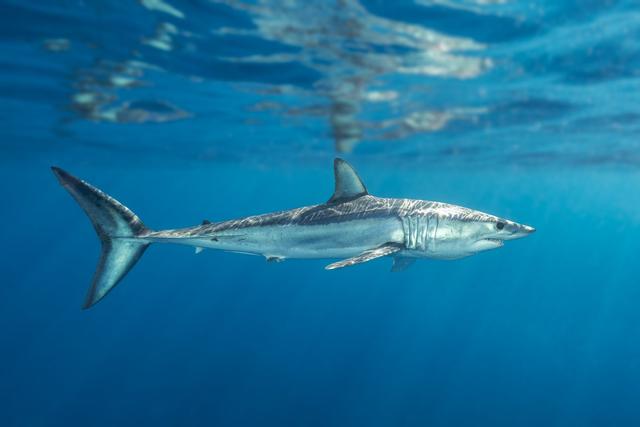 Shortfin Mako SharkThe fastest shark in the world
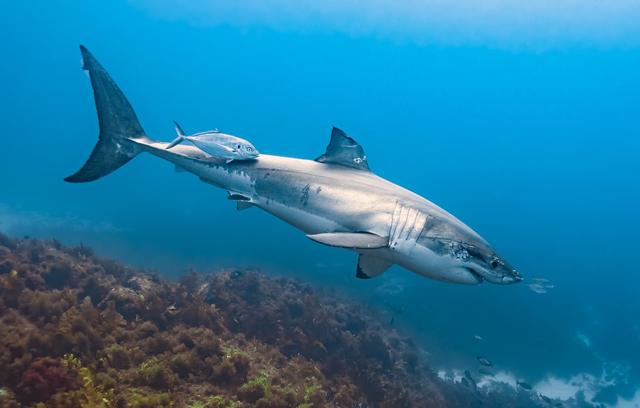 Great White SharkThe largest predatory fish on Earth
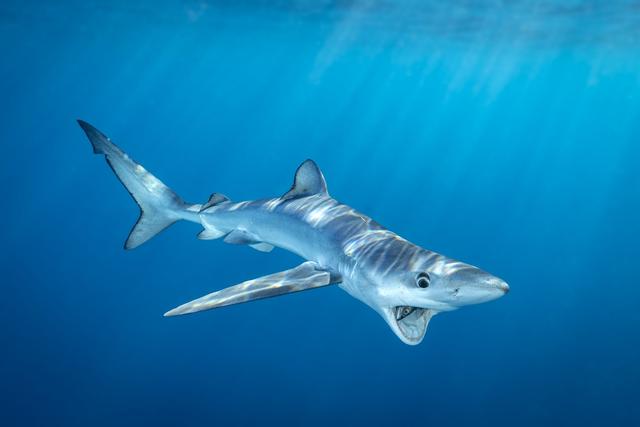 Blue SharkThe most widely travelled, and most heavily fished, shark
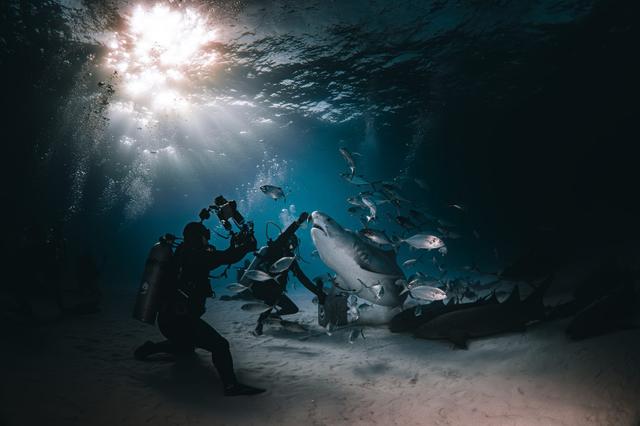 Tiger SharkThe shark that eats almost anything
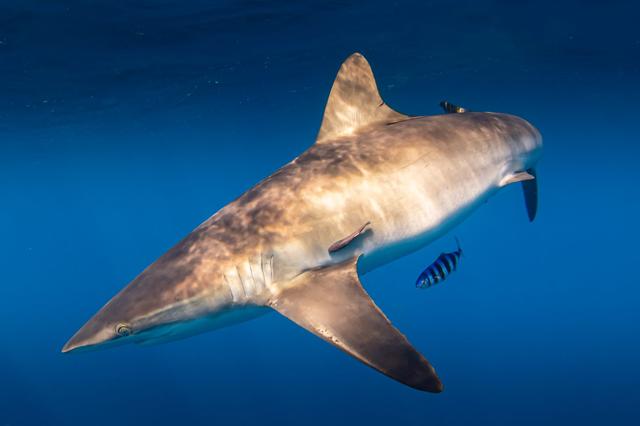 Silky SharkThe open-ocean shark the tuna fleets catch by the million
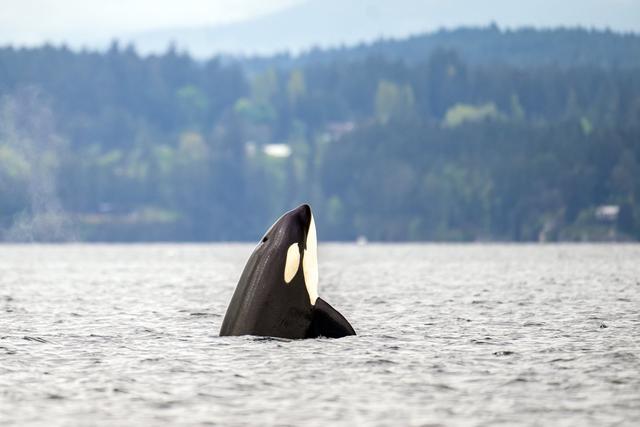 Orca (Killer Whale)The ocean's top predator, and the largest dolphin
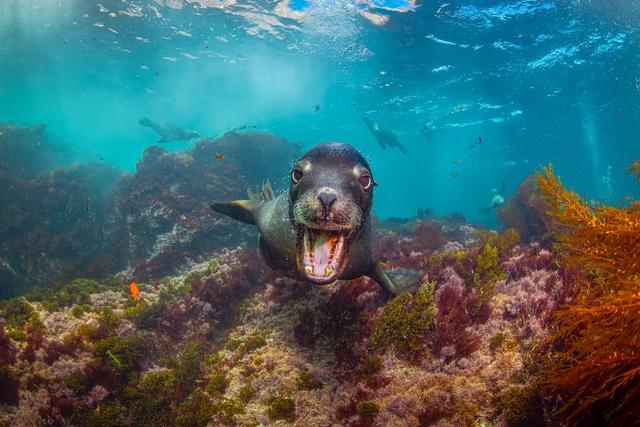 California Sea LionThe barking, curious acrobat of the Pacific coast
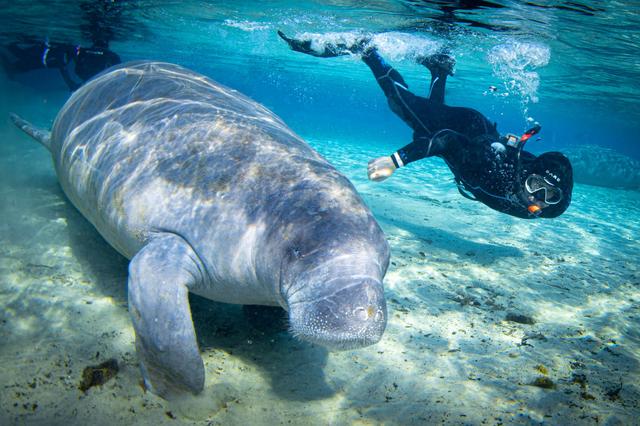 Florida ManateeThe gentle sea cow, and why it needs warm water and seagrass
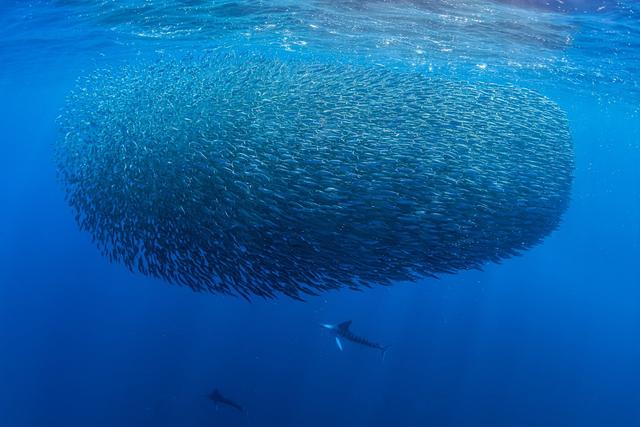 Pacific SardineThe small fish that feeds the whole coast
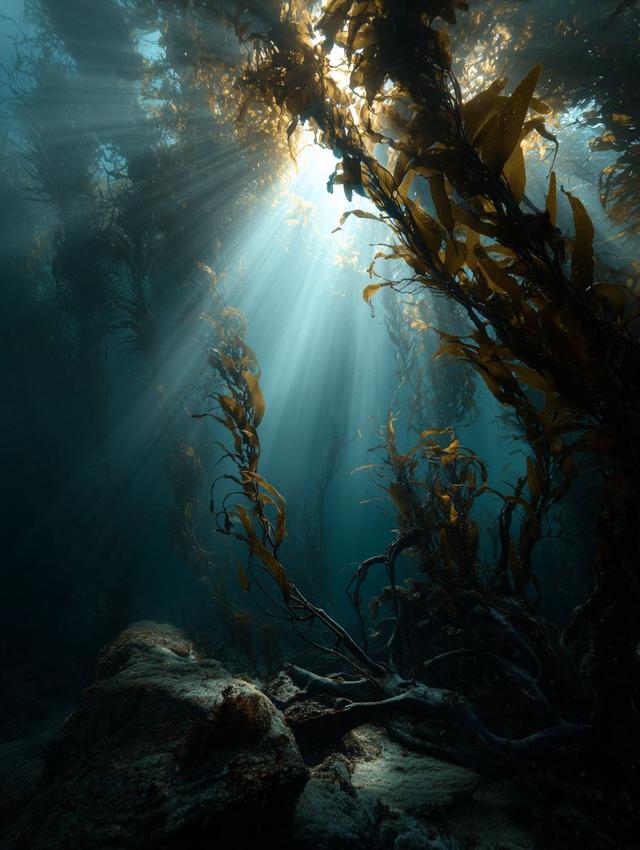 Giant KelpThe fastest-growing forest on Earth
Fund an Expedition
Every animal on this page is one our youth crews learn to film, count and protect. Your gift puts a kid on the boat at no cost to their family.
EIN 41-4167030 · 100% of net donations fund youth programs. Contributions are tax-deductible to the extent permitted by law.